

Border Surveillance Systems: Components, Challenges and Design Considerations
Border surveillance systems help security forces detect, identify and track people, vehicles and vessels approaching or crossing a border, often across hundreds of kilometres of difficult terrain. A modern border surveillance solution combines long-range sensors, rugged positioning equipment, towers or masts, communication links and command-and-control software. This article explains how these systems are built and what to consider when designing one.
What Must a Border Surveillance System Do?
- Detect movement at long range, day and night, in all weather.
- Classify and identify targets: person, animal, vehicle, boat or drone.
- Track targets continuously and hand them over between sensor sites.
- Record and report events so patrols can respond quickly and evidence is preserved.
Main Components
Long-range sensors
Ground surveillance radar detects moving targets over wide areas and cues the cameras. Thermal cameras see heat signatures at night and through light fog or smoke, while long-range zoom day cameras provide identification in daylight. Laser range finders measure the exact distance to a target. Most border sites combine several of these on one platform.
Pan tilt positioners
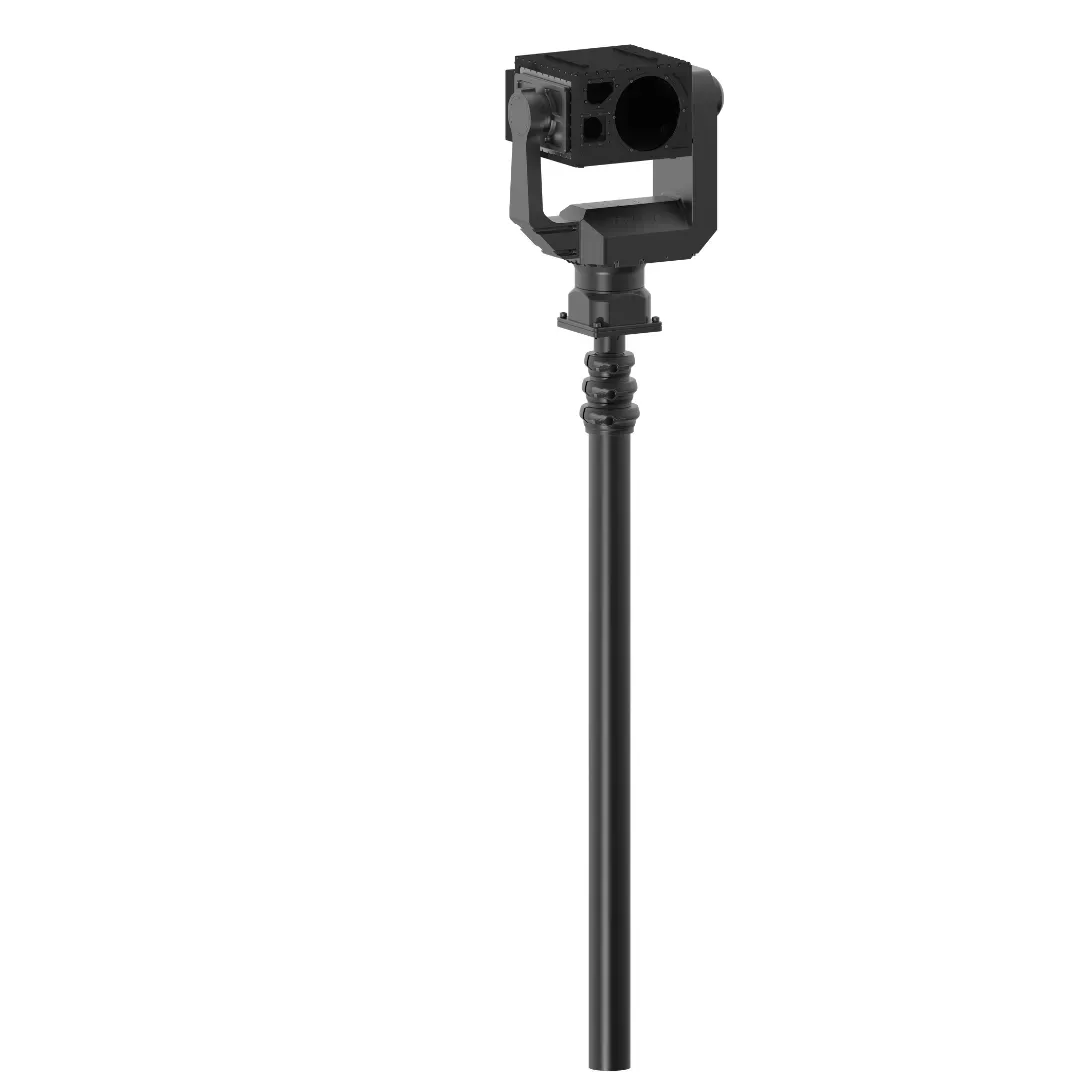
Sensors are mounted on heavy-duty motorized pan and tilt units that point them precisely towards radar cues and follow moving targets. Positioning accuracy, smooth low-speed tracking and stability in wind are critical, because a tiny angular error at the positioner becomes metres of error at several kilometres. Our guide How to Choose a Pan Tilt Unit covers these criteria in detail.
Towers, masts and mobile platforms
Height increases detection range and reduces blind spots behind terrain. Fixed sites use towers, while telescopic mast systems on vehicles and trailers create mobile surveillance systems that can be redeployed quickly to gaps in coverage or areas with changing activity.
Power and communication
Remote border sites often rely on solar panels, batteries or generators, so the energy consumption of sensors and positioners matters. Video and data are transmitted to command centres over fibre, microwave radio or satellite links.
Command and control
Software brings radar tracks, video and maps together on one screen, manages alarms and lets operators control many sites from one place. Video analytics reduce operator workload by highlighting relevant movement and filtering false alarms.
Environmental Challenges
Border equipment works outdoors for years with little maintenance. It faces extreme heat and cold, sandstorms, rain, snow, salt near coasts and strong winds on high towers. Equipment should therefore be designed and tested for its environment, typically with high IP protection ratings and environmental tests such as MIL-STD-810. Accessories such as window wipers, heaters and humidity control units keep optics clear and electronics dry.
Design Considerations
- Coverage planning: determine site locations from terrain analysis so that sensor coverage overlaps without blind spots.
- Detection and identification ranges: define which target must be detected or identified at what distance, then select sensors accordingly.
- Payload and positioner sizing: choose a pan tilt unit with enough capacity and accuracy for the full sensor payload.
- Reliability and maintenance: remote sites are expensive to visit; robust mechanics and easy servicing reduce lifetime cost.
- Scalability: the system should allow adding sites, sensors and mobile units over time.
- Integration: standard interfaces make it easier to combine equipment from different suppliers in one command-and-control system.
Fixed and Mobile Systems Together
The most effective border solutions combine fixed towers for permanent coverage of critical sections with mobile surveillance vehicles and portable systems on tripods that can be moved to new hot spots. This layered approach gives flexibility while keeping costs under control. For ship-based and coastal applications, see Naval Surveillance Systems.
TRIYOSYS for Border Surveillance
TRIYOSYS designs and manufactures pan tilt units, mast systems, tripods and surveillance systems for defense and security applications in Ankara, Türkiye. Read more in What Is a Surveillance System? or contact our team to discuss your project.